Truyện vừa "Nàng Liza tội nghiệp" (Бедная Лиза) dưới dạng Anh ngữ. Thật tiếc vì trên Internet chưa lưu hành bản Việt văn.
Poor Liza
Бедная Лиза
Karamzin's best known fictional work and a classic of Russian sentimentalism appeared for the first time in the Moscow Journal in 1792. So successful was the story that pilgrimages were made to the pond near the Simonov Monastery outside Moscow in which the unfortunate Liza drowns herself in the story. Not only that, but young lovers carved their initials and various tender sentiments in the trees surrounding the pond (it has been pointed out, however, that from about 1799 the inscriptions become somewhat less reverent), and there were even instances of suicides.
The plot of Poor Liza (Bednaia Liza) - the seduction by a young nobleman of a girl of lower social origins - was among the most conventional in European sentimentalism. What is characteristic of Karamzin's treatment of it is the subordination of the element of social conflict to the ethical problem and the avoidance of a completely negative character in the young man, Erast.
Although Liza herself can hardly be accepted as a realistic portrait of a peasant (particularly if she is compared with Aniuta, for example, in Radishchev's Journey), Karamzin has introduced an element of psychological analysis, which was virtually unknown before in Russian literature. The emotions experienced by a young girl in love for the first time are handled faithfully and with some delicacy, Erast and his milieu, which were of course more familiar to Karamzin, appear more convincing, without any of the pastoral aura that still clings to Liza herself. In a certain sense, Erast may be regarded a precursor of the soul-weary romantic heroes of Russian literature, of Pushkin's Eugene Onegin or Lermontov's Pechorin. The impact of Liza's pure emotions on her jaded young lover in the early part of the story, which is traced with no little skill, easily brings to mind the early relationship between Tatiana and Onegin in Pushkin's classic. Following the pattern of most of Karamzin's narrative prose, Poor Liza is presented as a first-person narration strongly emotional in coloration. The author frequently addresses his readers directly and expresses his own subjective opinions about the principals. However, unlike a great deal of sentimentalist fiction dealing with this or similar themes, Karamzin avoids a concluding moral and the eventual (conventional) triumph of good over evil.
The popularity of Poor Liza created a fashion for this type of fiction, and numerous imitations appeared, among them Poor Masha (Bednaia Masha) by A. Izmailov, Unfortunate Liza (Neschastnaia Liza) by P. Dolgorukov, Poor Lilla (Bednaia Lilla) by A. Popov, the Story of Poor Maria (Istoria bednoi Marii) by N. Brusilov, and others. Pushkin also wrote a version of the story, in a parodic vein, under the title "The Lady Rustic" (Baryshnia-krest'ianka). It was included in his Tales of Belkin (1830) cycle. The present translation follows the text in N. M. Karamzin, Izbrannye sochineniia, ed. P. Berkov and G. Makogonenko, 2 vols., Moscow-Leningrad, 1964.
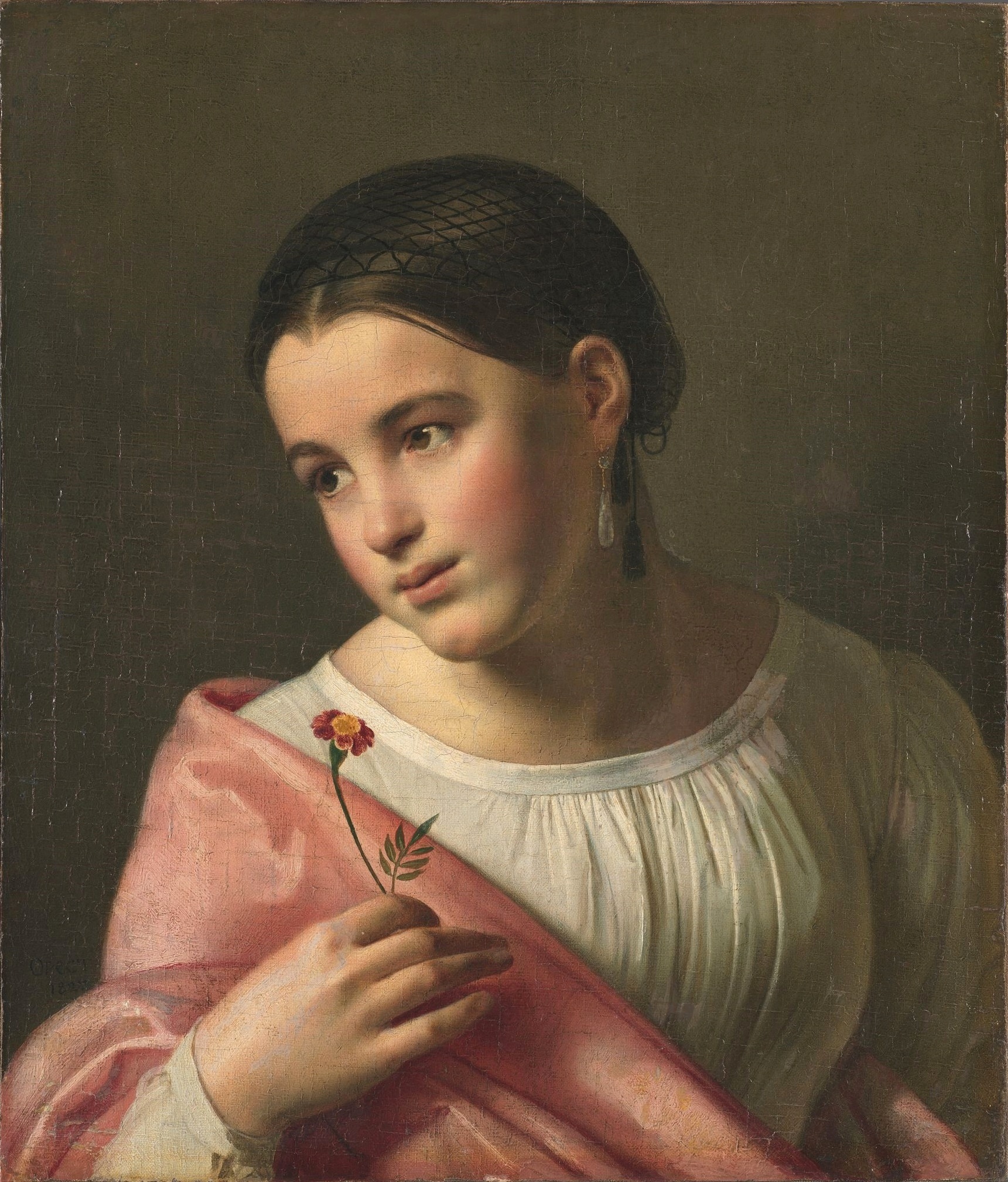
Perhaps no inhabitant of Moscow knows as well as I the environs of this city. For no one is out as often in the fields ; no one has wandered more on foot, aimlessly and without plan - wherever my nose led - through meadows and glades, over hill and dale. Each summer I find new, pleasant locales, or find new beauties in the old.
But the most pleasant place for me is there by the gloomy, Gothic towers of the Si...nov Monastery. Standing on the hill, to the right, you can see almost all Moscow, that frightful mass of houses and churches that strikes the eye as a mighty amphitheatre : a magnificent picture, especially when lit by the sun, when its evening rays ignite the innumerable gilded cupolas and the innumerable crosses rising up to the sky ! Misty, dark-green, flowering meadows spread out below. And beyond them, over yellow sand flows the clear river, ruffled by the light oars of fishing skiffs or gurgling under the rudder of freight barges, which sail from the most bountiful parts of the Russian Empire and supply hungry Moscow with grain. On the far side of the river you can see an oak grove, along which numerous herds graze. There young shepherds, sitting in the shade of the trees, sing simple, doleful songs and thus hasten along the summer days, so monotonous for them. Farther out, the gold-capped Danilov Monastery shines in the thick green of ancient elms. Still farther, almost on the horizon's edge, the Sparrow Hills turn blue. To the left appear vast, grain-laden fields, woods, and three or four small villages, and in the distance, the village of Kolomensk with its tall castle.
I visit the place often and almost always greet spring there. And I go there in the sullen fall days to grieve along with Nature. The winds moan frightfully in the walls of the de serted monastery, among the graves grown over with tall grass, and in the dark passageways of the cells. There, leaning against the rubble of gravestones, I hear the dead moaning of times devoured in the abyss of the past - moaning from which my heart shrinks and trembles. Sometimes I enter the cells and imagine those who lived in them - sad pictures ! Here I see a gray elder on his knees before a crucifix, praying for speedy release from his earthly bondage ; for all his pleasures in life have disappeared, all his feelings have died, save those of illness and feebleness. Over there a young monk - with a pale face and languishing gaze - looks out at the field through the grating of his window and sees the joyous birds sailing freely in the sea of air - he sees, and bitter tears stream from his eyes. He pines, fades, and wastes away - and the cheerless tolling of the bell heralds for me his untimely death. From time to time I examine on the portals of the temple the representations of the miracles that took place in the monastery : there fish fall from the sky to sate the inhabitants of the monastery, besieged by numerous enemies ; here an icon of the Blessed Mother turns the enemy to flight. All this refreshes in my memory the history of pur Fatherland - the sad history of those times when the rapacious Tatars and Lithuanians plundered with fire and sword the environs of the Russian capital, when hapless Moscow, like a defenseless widow, looked to God alone for aid in her bitter misfortunes.
But most often I am attracted to the walls of the Si...nov Monastery by the memory of the deplorable fate of Liza, poor Liza. Ah ! I love those objects that touch my heart and force me to shed tears of tender grief !
About a hundred and fifty yards from the monastery wall, by a birch grove, in the middle of a green meadow stands an empty cabin with no doors, no windows, and no floor. The roof has long since rotted and caved in. In this cabin thirty years or so ago lived the beautiful, dear Liza with her old mother.
Liza's father was a rather well-to-do settler, for he loved work, tilled the land well, and always led a sober life. But soon after his death, his wife and daughter grew poor, The lazy hand of a hired man worked the land poorly, and the grain ceased to thrive. They were forced to rent out their land, and for a pittance of a sum. And what is more; the poor widow, almost constantly shedding tears over the death of her husband—for indeed peasant women know how to love!— from day to day became weaker and weaker and finally could not work at all. Liza alone—who was fifteen years old at her father's death—only Liza, sparing neither her tender youth nor her rare beauty, worked day and night; she wove flax, knitted stockings, gathered flowers in the spring and picked berries in the summer and sold them in Moscow. Observing her untiring daughter, the sensitive and good mother often pressed her to her weakly beating heart, called her the grace of God, her provider, a joy in her old age, and prayed to God that He reward her for all she was doing for her mother. "God gave me hands in order to work," Liza would say, "you fed me at your breast and watched after me when I was a child: now my turn has come to watch after you. Only do stop grieving,' stop weeping; our tears will not bring dear father back to life." But often the tender Liza could not hold back her own tears. Oh! She would remember that she once had a father and that he was no more; but to soothe her mother she tried to hide the grief in her heart and appear at ease and gay. "In the next world, dear Liza," the bereaved old woman would answer, "in the next world I will stop weeping. There, so they say, everyone will be happy; I am sure I'll be happy when I see your father. Only, I don't want to die now—what will become of you without me? Whom can I leave you to? No, God grant you will get settled somewhere first! Perhaps a good man will turn up soon. Then, having given you my blessing, dear children, I shall cross myself and peacefully lie down in the damp earth".
About two years had passed since the death of Liza's father. The meadows were covered with flowers, arid Liza had come to Moscow with lilies of the valley. A young, welldressed man with a pleasant appearance greeted her on the street. She showed him the flowers—-and blushed. "Are you selling these, Miss?" he asked with a smile. ''I am," she answered. "How much are you asking?"—"Five kopecks."— "That's too little. Here's a ruble for you.'' Liza was amazed, then dared glance at the young man. She blushed even more, and casting her eyes to the ground, she told him she would not take the ruble, "Why not?"—"I do not need any extra."— "I think that beautiful lilies of the valley, plucked by the hand of a beautiful girl, are worth a ruble. But since you will not take it, here is five kopecks, I would like to buy flowers from you all the time; I would like you to gather them only for me." Liza gave him the flowers, took the five kopecks, bowed and wanted to go; but the stranger held her by the arm. "But where are you going, Miss? ''Home. "—"And where is your home?" Liza told him where she lived; she told him, and left. The young man did :not want ,to hold her back, perhaps because the passers-by were beginning to stop arid stare and snigger at them.
When she arrived home, Liza told her mother what had happened to her. "You did well by not taking the ruble. Perhaps this was some sort of bad man..."—"Oh, no, Mother! I don't think so. He had such a good face and his voice..."—"Nonetheless, Liza, it is better to live by your own labors and to take nothing as a gift. You have yet to learn, my dear, how evil people can harm a poor girl! My heart is always in my throat when you go into the city; I always place a candle before the icon and pray to God to protect you from all evil and harm." Tears came to Liza's eyes; she kissed her mother.
The next day Liza gathered the very best lilies of the valley and again went with them to the city. Her eyes were searching quietly for something. Many people wanted to buy flowers from her; but she answered that they were not for sale, and she kept looking first to one side and then to the other. Evening came on; she had to return home, and the flowers were cast into the Moscow River. "No one shall have you!" said Liza, feeling a certain sadness in her heart. The following evening she was sitting near the window, spinning and singing sad songs in a quiet voice, when suddenly she sprang up and cried, "Oh!..." The young stranger was standing under the window.
"What's the matter?" asked her frightened mother, who was sitting beside her. "Nothing, Mother dear," answered Liza in a timid voice, "I just caught sight of him."—"Of whom?"— "That gentleman who bought flowers from me." The old woman looked out the window. The young man bowed to her so respectfully, with such a pleasant appearance, that she was unable to think anything but good of him. "How do you do, my good woman!" he said. "I am Very tired. Would you have any fresh milk?" The obliging Liza, not waiting for an answer from her mother—perhaps because she knew it already—ran to the cellar, brought back a clean earthenware pot covered with a clean wooden plate, snatched up a glass, washed it and dried it with a white towel, poured and handed the glass through the window, but she herself kept looking to the ground. The stranger drank—and nectar from the hands of Hebe could not have seemed to him more delicious! Anyone can guess that afterward he thanked Liza, and thanked her not so much with words as with his glance. Meanwhile the good-hearted old woman had managed to tell him of her grief and her comfort—of the death of her husband and of the fine qualities of her daughter, of her love for work, tenderness, and so forth and so on. He listened to her attentively, but his eyes were—is it necessary to say where? And Liza, timid Liza, glanced at the young man from time to time; but lightning does not flash and disappear in a cloud so quickly as her blue eyes, having met his glance, turned to the ground. "I would like your daughter to sell her work to no one but me," he said to her mother. "Thus she will not have reason to go into the city often, and you will not have to part with her. I myself can stop by from time to time." At this point, a joy that she tried in vain to hide sparkled in Liza's eyes; her cheeks flamed up like the sunset on a clear summer evening; she stared at her left sleeve and plucked at it with her right hand. The old woman eagerly accepted this offer, suspecting no evil intentions in It, and assured the stranger that the cloth that Liza wove and the stockings she knitted were exceptionally fine, and wore better than any others. It grew dark, and the young man now wanted to leave. "But how shall we address you, good and kind sir?" the old woman asked. "My name is Erast," he answered. "Erast," Liza said softly, "Erast!" She repeated this name five or six times, as if trying to learn it by heart. Erast said goodbye to them until the next time, and left. Liza followed him with her eyes, while her mother sat lost in thought, and then, taking her daughter by the hand, she said: "Oh, Liza! How good and kind he is! If only your betrothed would be like him!" Liza's heart skipped a beat. "Mother, dear mother! How could that ever be? He is, a landowner, and among peasants ..." Liza did not finish her sentence.
It is time the reader should know that this young man, this Erast, was a rather wealthy nobleman with a decent mind and a good heart, good by nature, but weak and frivolous. He led a dissipated life, thought only of his own pleasure, sought it in Worldly amusements, but often could not find I : he was bored and would complain of his fate. At their first meeting Liza's beauty made an impression on his heart. He read novels arid idylls; he had a rather lively imagination, and often transported himself in thought back to those times (real or unreal), when, if one is to believe the poets, everyone wandered carefree through the meadows, bathed in clear springs, kissed like turtledoves, rested under the roses and the myrtle, and spent all their days in happy idleness. He felt that he had found in Liza that which his heart had long sought. Nature is calling me into its embrace, to its pure joys, he thought, and he decided—at least for a while—to abandon high society.
Let us return to Liza. Night had fallen—the mother blessed her daughter and wished her sweet dreams; but this time her wish was not fulfilled: Liza did not sleep well at all. The new guest in her soul, Erast's image, was so vividly before her that she awoke almost every minute, awoke and sighed. Even before the rising of the sun Liza got up, went down to the banks of the Moscow River, sat on the grass and, lapsing into a despondent mood, gazed at the white mists that churned in the air and, rising upward, left behind sparkling drops on the green cloak of Nature. Silence reigned all about. But soon the rising luminary of the day awakened all creations: groves and hedges came to life; birds fluttered about and began to sing; and the flowers raised their heads to drink in the life-giving rays of light. But Liza kept sitting despondently. Ah, Liza, Liza! What has happened to you? Up to this time, awaking with the birds, you were gay along with them in the morning, and your pure, joyous soul shone in your eyes, just as the sun shines in the drops of heavenly dew; but now you are lost in thought, and the universal joy of nature is foreign to your heart. Meanwhile a young shepherd, playing his pipes, was driving his flock along the banks of the river. Liza stared at him and thought: If only the one who now occupies my thoughts had been born a simple peasant, a shepherd, and if only he were now driving his flock past me: oh! I would bow to him with a smile and I would say to him pleasantly: "Hello, my dear shepherd boy! Where are you driving your flock? Here, too, the green grass grows for your sheep; and here the crimson flowers blossom, from which one can plait a garland for your hat." He would glance at me with a tender look—perhaps he would take my hand... A dream! The shepherd, playing his pipes, passed by and with his variegated flock vanished behind a near hill.